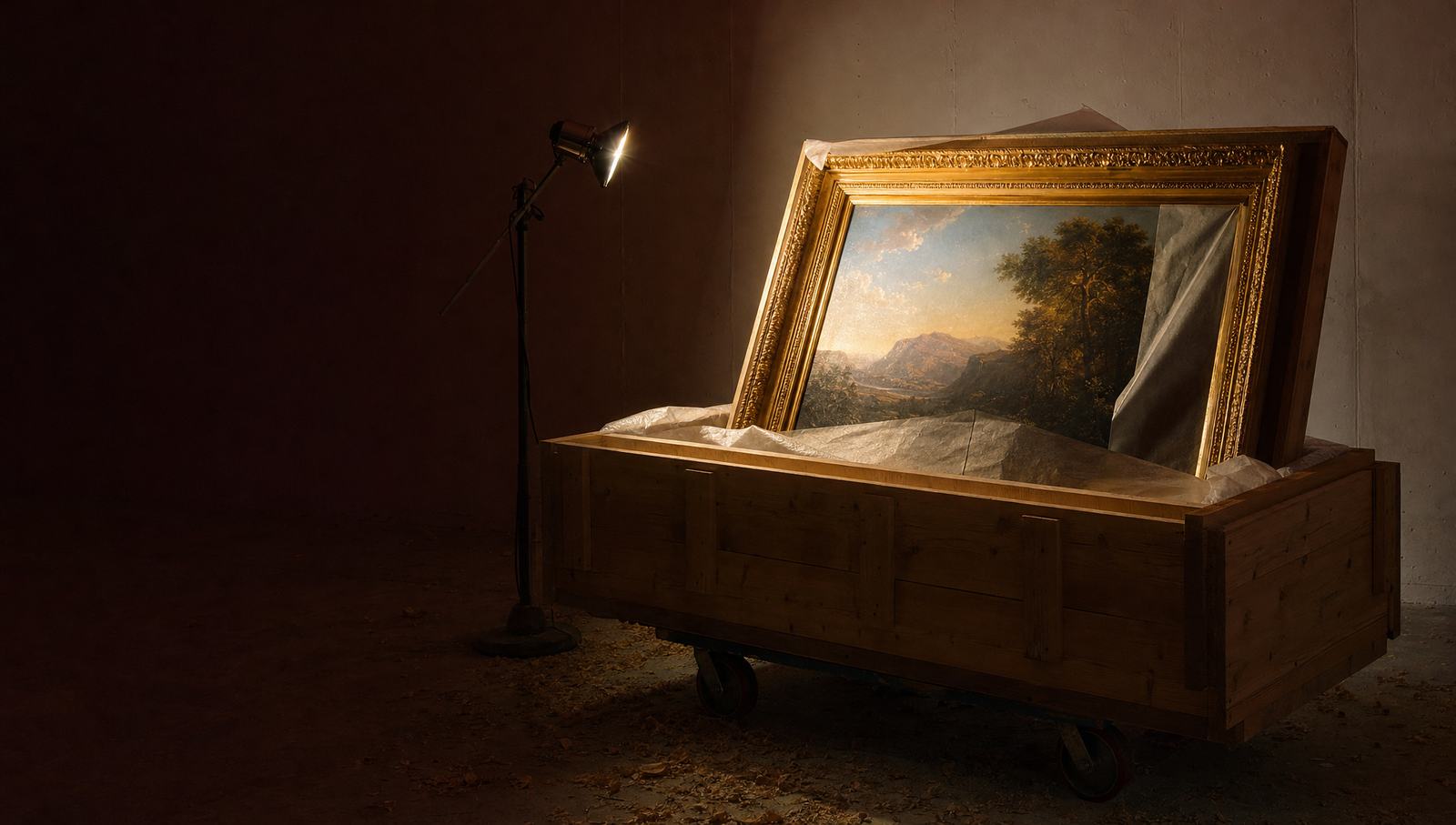
The storeroom, before openingNotes on art, where it travels and where it comes to rest.
-
 No. 1What a crate tells youA travelling painting spends more of its life in a box than most visitors would guess. The box is built for that one picture.
-
 No. 2Reading the labelThe small card beside a painting holds more than a title. Most of what it says is about where the picture has been.
-
 No. 3Provenance, one owner at a timeA painting's ownership history is built from sale catalogues, letters and labels on the back of the frame. The gaps matter as much as the names.
-
 No. 4The conservator's benchRestoration on television looks dramatic. At the bench it is mostly patience, swabs and very good light.
-
 No. 5A gallery on a Tuesday morningMuseums are different places when they are nearly empty. A weekday morning is the best time to find that out.
-
 No. 6When the paintings went undergroundIn 1939 the great museums of Europe emptied their walls in days. Some of their pictures spent the war inside a mountain.